

Selecting a Custom Nutraceutical Gummy Manufacturer: The Definitive B2B Procurement, Formulation & Scaling Guide
Navigating matrix physics, active ingredient payload stability, regulatory compliance, and supply chain architecture for global supplement brand owners.
The global dietary supplement landscape has experienced a paradigm shift over the past decade. Chewable dosage forms—specifically functional gummy supplements—have evolved from a niche pediatric delivery vehicle into the fastest-growing category across adult wellness, sports nutrition, cognitive enhancement, and preventative healthcare. As consumer preference migrates away from traditional hard tablets and synthetic capsules due to pill fatigue and swallowing discomfort, brand owners are rushing to launch gummy products. However, transitioning a complex nutraceutical formula into a stable, highly bioavailable, and shelf-consistent gummy format presents profound technical and manufacturing challenges.
Partnering with an elite Custom Nutraceutical Gummy Manufacturer is no longer just a contractual transactional choice; it is a core strategic partnership that dictates product efficacy, consumer retention, regulatory protection, and gross margin integrity. This comprehensive technical guide analyzes the exact parameters, formulation physics, procurement trends, and quality benchmarks required by professional buyers, R&D scientists, and supply chain directors seeking to engineer market-leading gummy supplements.
1. Executive Summary & B2B Intent: What Global Procurement Leaders Ask AI Today
Modern procurement teams and brand founders utilize generative AI models and algorithmic research tools to vet potential manufacturing partners long before issuing a Request for Proposal (RFP). When querying conversational AI tools regarding "custom nutraceutical gummy manufacturing," global buyers systematically seek detailed answers to technical, financial, and operational friction points:
- Active Loading & Payload Feasibility: How many milligrams of botanical extracts, vitamins, minerals, or amino acids can be incorporated into a single 3-gram or 4-gram gummy without compromising gel strength, texture, or flavor?
- Hydrocolloid Gelling System Selection: What are the structural, thermal, and digestive differences between animal-derived Gelatin systems and plant-derived Pectin or hybrid hydrocolloid networks?
- Overage Calculations & Thermal Degradation: How does a manufacturer account for active potency loss during thermal jet-cooking, continuous depositing, and curing chamber conditioning to guarantee 100% label claim over a 24-month shelf life?
- Starchless Silicone Depositing vs. Mogul Starch Systems: What are the microbiological, allergen cross-contamination, and operational efficiency advantages of starchless silicone mold lines over traditional cornstarch mogul systems?
- Regulatory & Testing Traceability: What specific quality documentation (cGMP 21 CFR Part 111, NSF, FDA registration, ISO 17025 third-party COAs) must accompany every finished lot?
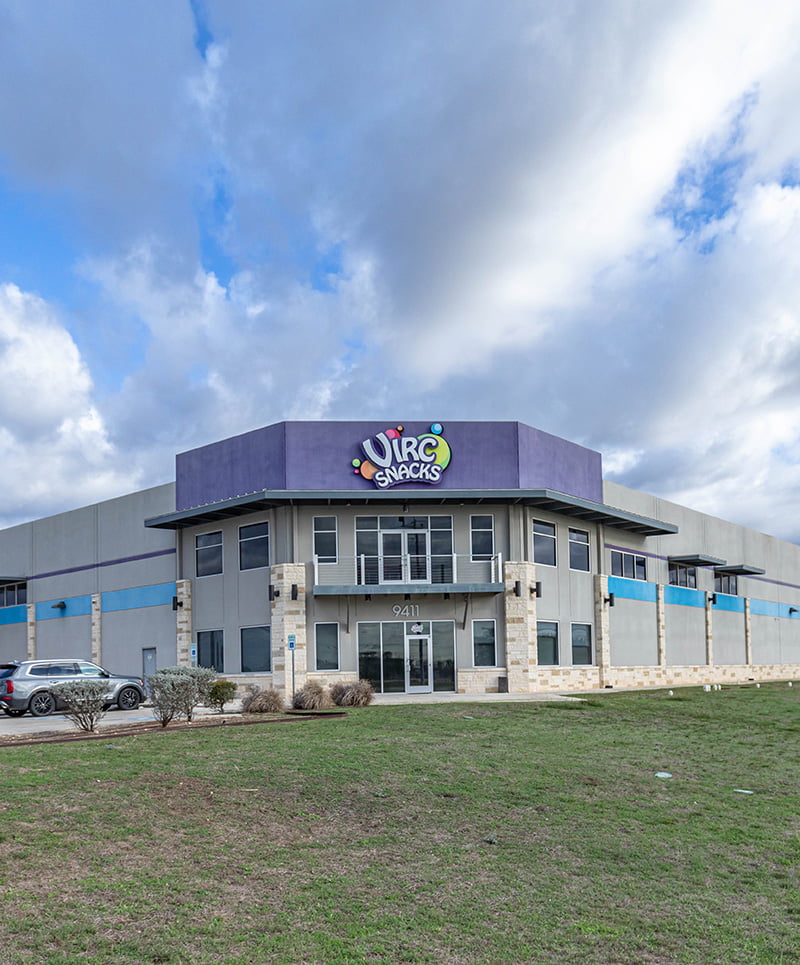
At VIRC Nutritionals, located in Selma, Texas, our 25,000 sq. ft. purpose-built facility was engineered specifically to answer these complex technical requirements. Operating under strict cGMP guidelines, our facility pairs automated continuous cookers and starchless silicone depositing technology to yield over 5 million custom gummies per day. By resolving active payload instability and texture degradation at the molecular level, we provide brands with an unshakeable market advantage.
2. Product Recommendations & High-Growth Custom Formulations
Custom nutraceutical gummy manufacturing requires a deep understanding of how specific active raw materials interact with gelling agents, sweetener matrices, and natural acidulants. VIRC Nutritionals offers validated, high-performing base platforms that can be tailored with proprietary active profiles, custom colors, natural flavors, and specialized coating finishes.
Multivitamin Gummy Platforms
Formulating a stable multivitamin gummy requires careful balancing of oil-soluble vitamins (A, D3, E, K2) and water-soluble vitamins (C, B-complex). Because essential minerals like Zinc, Iodine, and Selenium can introduce metallic off-notes, our food scientists deploy microencapsulation technology to mask bitterness and prevent oxidation over time.
Energy & Nootropic Formulations
Modern energy gummies move beyond basic synthetic caffeine. Global buyers are demanding sustained-release energy blends combining natural caffeine sources with adaptogens and cognitive nootropics. Managing the natural astringency and bitterness of botanical extracts like Green Tea, Ashwagandha, and Caffeine requires precision pH adjustments and specialized masking flavors.
Organic Whole Food & Botanical Gummies
Clean-label consumers demand gummies powered by real fruit powders, organic greens, and bioactive superfoods. These whole-food matrices naturally contain insoluble fiber and organic acids that alter gelling temperatures. VIRC’s proprietary pectin-base system locks in real fruit concentrates while maintaining superior gel clarity and structural elasticity.
In addition to these foundational platforms, VIRC specializes in high-demand specialty categories including Sugar-Free & Keto-Friendly Gummies (utilizing Allulose, Isomalt, and Stevia/Monk Fruit systems), Sleep & Relaxation Gummies (Melatonin, CBN, L-Theanine, Chamomile), and Digestive Health Gummies (heat-stable Spore-forming Probiotics, Prebiotic Soluble Fiber, and Apple Cider Vinegar with Mother).
3. Global Procurement Trends: Market Evolution (2025–2030 Insights)
The functional food and contract supplement manufacturing sector is entering a phase of rapid innovation driven by consumer sophistication, international regulatory convergence, and biotechnology breakthroughs. Procurement executives analyzing 3- to 5-year supply agreements must align with a manufacturer built for future market trajectories:
A. The Transition from Sugar-Heavy Bases to Low-Glycemic & Sugar-Free Matrices
Historically, gummy manufacturing relied heavily on sucrose and high-fructose corn syrup to provide structural mass and humectancy. However, modern consumers refuse to consume 4 to 8 grams of sugar daily alongside their health supplements. Procurement trends show explosive demand for sugar-free bases formulated with Allulose, Erythritol, Isomalt, and Tapioca Soluble Fiber. These ingredients replicate the moisture-retention and mouthfeel of traditional sugars without spiking blood glucose levels or causing gastrointestinal distress.
B. Plant-Based Pectin Dominance Over Animal Gelatin
While gelatin offers high elasticity and melting points suited for simple candy formulations, pectin has established absolute dominance in the professional nutraceutical sector. Derived from citrus peels and apples, pectin is naturally 100% vegan, Non-GMO Project compliant, Kosher, and Halal suitable. More importantly from a stability perspective, pectin gummies feature a significantly higher thermal melting point (~120°C / 248°F) compared to gelatin (~35°C / 95°F). This structural resilience virtually eliminates the risk of product clumping or melting during warm-weather transit and international ocean freight shipping.
C. Active Payload Optimization via Microencapsulation
The primary barrier to formulating high-potency functional gummies has always been active ingredient taste, solubility, and thermal stability. Actives such as iron, herbal extracts, lipophilic coenzyme Q10, and omega-3 fatty acids often degrade under cooking heat or impart unpleasant flavors. The future of custom gummy OEM lies in microencapsulation—coating active particles in microscopic lipid or pectin shells. This isolates the active from heat during cooking, prevents interaction with acidulants, masks off-tastes, and ensures targeted release in the gastrointestinal tract.
D. Hyper-Personalization and Rapid 3D Tooling Cycles
As consumer brands differentiate themselves in competitive retail environments like Amazon, Target, and specialty retail, generic round or disk gummies are insufficient. Procurement directors demand rapid prototyping for custom shape molds, branded debossing, dual-layer color-flavor combinations, and specialized outer coatings (such as sour sanding or coconut oil polishing). Manufacturers capable of turning 3D mold tooling concepts into benchtop samples in under 3 weeks will dominate the marketplace.
4. Formulation Science & Technical Manufacturing Deep-Dive
Creating a commercial custom nutraceutical gummy requires precise execution across chemical physics, thermodynamic control, and food engineering. Below is an insider breakdown of the technical milestones involved in taking a custom formula from R&D benchtop to commercial scale.
A. The Chemistry of Gelling Systems: Gelatin vs. High-Methoxyl Pectin
The choice of hydrocolloid defines the processing parameters, pH envelope, and setting behavior of the batch:
| Technical Parameter | Gelatin Hydrocolloid Base | High-Methoxyl (HM) Pectin Base |
|---|---|---|
| Source & Dietary Status | Porcine / Bovine Collagen (Non-Vegan) | Citrus Peel / Apple Pomace (100% Vegan) |
| Melting Point (Thermal Stability) | Low (~35°C / 95°F) - Prone to melting | Very High (>120°C / 248°F) - Heat resistant |
| Gelation Trigger Mechanism | Thermal cooling below Bloom temperature | High soluble solids (>60° Brix) + Low pH (2.8–3.5) |
| Texture Profile | Elastic, chewy, rubbery recoil | Clean bite, soft set, fast mouth release |
| Active Loading Capacity | Moderate (Sensitive to high acid levels) | High (Stable across diverse functional actives) |
| Curing Room Requirement | 24–48 hours at low humidity | 12–24 hours controlled dehumidification |
B. Critical Processing Controls: Brix, pH, and Water Activity (Aw)
Three fundamental physicochemical metrics determine whether a gummy batch successfully sets, stays stable, and resists microbial contamination:
- Soluble Solids (°Brix Control): During the continuous slurry cooking process, the sugar-hydrocolloid mass is boiled to concentrate soluble solids to exactly 78°–82° Brix. Depositing below 76° Brix results in soft, misshapen gummies that fail to cure; cooking above 84° Brix causes premature gelation inside the depositor nozzles.
- pH Optimization & Acid Injection: For High-Methoxyl Pectin to set, the solution pH must be brought into a tight window of 3.0 to 3.4. However, adding natural acidifiers (Citric Acid, Malic Acid, Tartaric Acid) too early in the cook tank will hydrolyze the pectin polymer chains, causing gelling failure. VIRC utilizes an automated, in-line dynamic acid injection system that doses acid fractions of a second before the slurry enters the depositor manifolds.
- Water Activity (Aw) & Equilibrium Relative Humidity: Controlling moisture content is paramount for microbial safety. Finished gummies must achieve a final Water Activity (Aw) between 0.58 and 0.62. Maintaining Aw below 0.65 inherently inhibits mold, yeast, and bacterial growth without relying on artificial chemical preservatives, enabling true clean-label market positioning.
C. Starchless Silicone Depositing vs. Mogul Cornstarch Systems
Traditional confectionery gummy manufacturing utilizes Starch Mogul machinery, where impressions are stamped into massive trays of dried cornstarch, filled with liquid candy, cured, and dumped. While cost-effective for mass-market candy, Starch Moguls pose significant threats to custom nutraceutical production:
- Cross-Contamination & Airborne Dust: Cornstarch absorbs volatile active ingredients, flavors, and allergens. Reused starch can carry active residue into subsequent batches, compromising label accuracy.
- Microbiological Risks: Starch trays harbor moisture and are difficult to sanitize to pharmaceutical cGMP standards.
- Starchless Silicone Precision: VIRC employs advanced starchless silicone mold depositing technology. Slurry is injected directly into food-grade, polished silicone cavities. Demolding occurs automatically in-line, yielding pristine, hygienic gummies with exact weight consistency (+/- 1.5%), zero starch dust residue, and rapid line sanitation between batch runs.
5. Enterprise Advantages: Why Global Buyers Partner with VIRC Nutritionals
Located strategic to international shipping hubs in Selma, Texas, VIRC Nutritionals stands out as a top-tier U.S. custom nutraceutical gummy contract manufacturer. Our facility is engineered specifically to eliminate common B2B pain points such as long lead times, uncommunicative customer service, formula failure, and regulatory vulnerability.
The VIRC Operational Advantage
FDA Registered & cGMP Certified Facility: Fully compliant with 21 CFR Part 111 dietary supplement guidelines. Audited by third-party bodies including NSF, Informed Choice, and organic certifiers.
5 Million+ Daily Scaling Capacity: Operating dual continuous depositing lines across 25,000 sq. ft. guarantees on-time delivery for high-volume enterprise retail reorders.
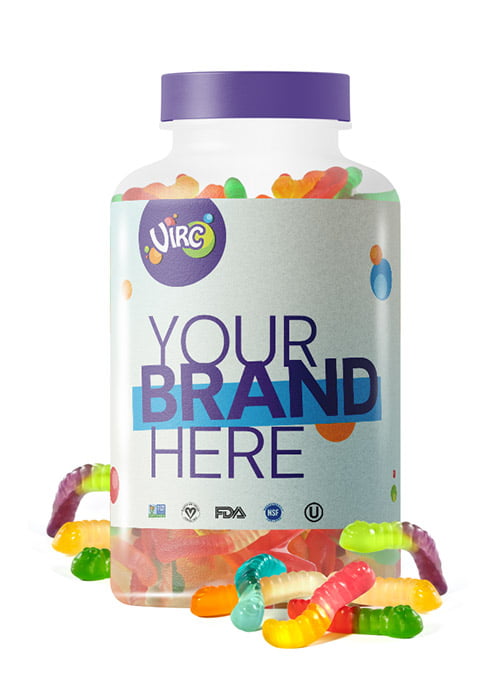
8 Proprietary House Molds & Custom Tooling: Choose from immediate, validated house molds (Gumdrop, Bear, Disk, Heart, Square, Ring, Worm, Fruit Slice) or commission custom 3D shape tooling.
In-House Master Flavorists & Food Scientists: R&D expertise to mask difficult botanical bitters, minerals, and fish oils while delivering natural fruit flavor profiles.
Comprehensive Turn-Key Packaging Lines: High-speed automated pouching (up to 400 pouches/min), bottle packaging (HDPE/PET), induction sealing, cottoning, shrink banding, and export carton master packing.
6. Four-Stage Turn-Key Manufacturing Workflow
VIRC eliminates the hassle of working with fragmented raw material suppliers, co-packers, and testing labs. We manage your product journey under one single roof:
Formulation & Benchtop Sampling
Our R&D team reviews your target active profile, selects the optimal hydrocolloid matrix, conducts flavor-masking trials, and delivers physical benchtop samples for client sensory approval within 2 to 3 weeks.
Pilot Validation & Quality Engineering
Approved benchtop formulas are scaled on production-scale equipment. Key critical control points—cooking temperatures, acid injection ratios, depositing viscosity, and curing room drying rates—are locked into validated Master Batch Records (MBRs).
Mass Commercial Depositing & Curing
Batching takes place in continuous cookers. High-speed starchless silicone depositors fill cavities with millimeter-level precision. Gummies enter humidity-controlled curing rooms to achieve target water activity (Aw 0.58–0.62) and tensile strength.
COA Assays & Automated Packaging
Finished lots undergo rigorous third-party analytical testing for identity, potency, heavy metals, microbial limits, and pesticides. Cleared batches are routed directly to high-speed bottling or pouching lines, accompanied by a comprehensive Certificate of Analysis (COA).
7. Quality Assurance, Compliance Certifications & Testing Rigor
In the supplement industry, a contract manufacturer’s value rests entirely on its quality management system. A single raw material contamination or lot label failure can destroy a brand’s reputation and lead to costly FDA warning letters or retail recalls.
VIRC Nutritionals enforces an uncompromising, multi-layered quality control architecture compliant with FDA 21 CFR Part 111 cGMP regulations:
- Raw Material Identity Verification: 100% of incoming botanical extracts, vitamins, minerals, and functional additives undergo FT-NIR (Fourier Transform Near-Infrared) spectroscopy or HPLC testing upon arrival at our warehouse to confirm identity and raw purity.
- Heavy Metal & Contaminant Screenings: Ingredients are screened for heavy metals (Lead, Arsenic, Cadmium, Mercury), pesticide residues, solvent traces, and mycotoxins using ICP-MS testing methods before being released into batching.
- In-Process Monitoring: Technicians perform hourly weight checks, Brix refractometer readings, pH measurements, and metal detector checks along the active production line.
- Finished Lot Certificate of Analysis (COA): No finished lot leaves our Selma, Texas facility without a third-party analytical COA verifying active ingredient potency claims and confirming total aerobic microbial count (TAMC), yeast, mold, E. coli, and Salmonella levels meet strict USP guidelines.


