0%

Custom Gummy Bottling and Packaging turns a finished gummy into a product that can be counted, protected, identified, and shipped consistently. The work can include bottle selection, filling, cap and liner choices, labeling, and case packing. Each choice affects what customers see and how the product is handled after production. A clear bottle may show colorful gummies well, but it can also expose them to light.

Market growth makes these details increasingly relevant. Grand View Research estimated the global gummy vitamins market at USD 7.1 billion in 2023 and projected a 9.5% compound annual growth rate from 2024 to 2030. This figure describes a market forecast, not a guarantee for any brand. Still, it points to rising competition for shelf space and customer attention. Small details matter.

For manufacturers, packaging decisions should start with the gummy itself: its size, shape, stickiness, serving count, and sensitivity to heat or moisture. A bottle that works for small bears may not suit larger, softer pieces. Cap fit, fill accuracy, label readability, and tamper-evident features also deserve practical testing. There is no universal setup. Packaging that looks polished in a sample may behave differently on a fast production line. That gap is easy to underestimate. This guide explains what custom gummy bottling and packaging involves, which components can be tailored, and how to assess options with product performance and customer experience in mind.
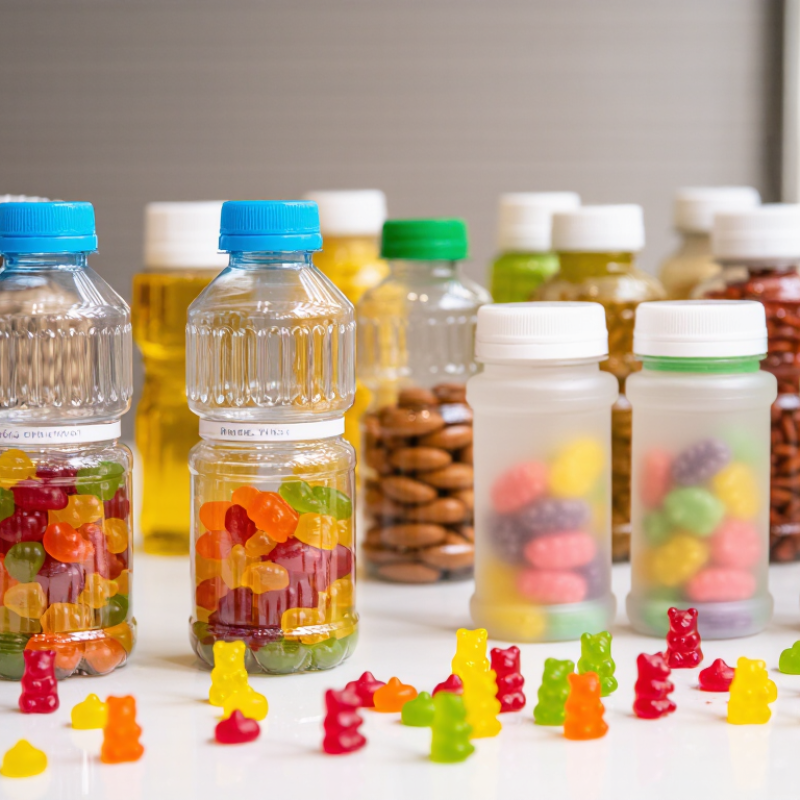
What Is Custom Gummy Bottling and Packaging?

What Custom Gummy Bottling and Packaging Means

Custom gummy bottling and packaging means matching the container, filling method, closure, and label to the gummy product’s needs. It is more than putting candies into a bottle. The team must consider gummy size, shape, count, and texture before choosing equipment and packaging materials.

For example, soft gummies may cling together or catch at the filling point. A line may need gentler handling and careful adjustments to keep counts consistent. Small details matter. Bottle openings must allow gummies to flow without crushing them, while closures should fit securely and be easy to open. Moisture control also deserves attention: exposure can change a gummy’s texture during storage. A seal and suitable packaging material help reduce that risk, but they do not replace proper product testing.

Labels and pack formats are part of the customization, too. A short bottle, a wide-mouth jar, or a pouch can suit different serving sizes and customer preferences. The best choice depends on the gummy itself, the packing line, and how the product will be stored and shipped. There is no universal setup. Even a neat-looking package can cause trouble if gummies bridge inside the bottle or labels wrinkle on a curved surface. Those details often need a production trial, and the first setup may not be perfect.

How Gummies Are Prepared for Bottling

Before gummies reach a bottle, the batch needs to be stable, clean, and consistent.

Depending on the recipe, the cooked mixture is deposited into molds, cooled, and dried until each piece holds its shape. Operators check surface tack, piece weight, and moisture; a gummy that feels dry outside may still soften inside the pack. No single drying time fits every formula. That detail is easy to underestimate.

After demolding, gummies are screened for misshapen pieces and residue, then kept in clean, dry conditions while containers are prepared. Fillers should be checked for accurate counts or weights, and seals and lot codes need verification.

FDA’s 21 CFR Part 117 requires food facilities to establish and document applicable sanitation controls. CDC estimates about 48 million U.S. foodborne illnesses annually; its estimate covers foods broadly, not gummies specifically (CDC, “Estimates of Foodborne Illness,” 2011). It is a useful reminder that handling matters. A rushed transfer can undo careful drying, so teams should record checks and investigate variation rather than assume every batch behaves alike.

How Bottles Are Filled, Sealed, and Labeled

What Is Custom Gummy Bottling and Packaging?

How Bottles Are Filled, Sealed, and Labeled

Bottling starts with checks on the empty containers, caps, and gummies. Operators confirm that bottles are clean and suitable for the product. Gummy size, shape, and stickiness can vary, even within one batch. That affects how smoothly pieces move through a filling line. Small details matter.

A filling machine dispenses gummies by count or weight, depending on the packaging plan. Counted fills need consistent piece sizes; weight-based fills need calibrated scales. The line is adjusted to reduce jams and spills, then sample bottles are checked for fill accuracy. There is no single setting for every gummy. A line that looks steady may still need careful adjustment.

After filling, bottles are capped and sealed using the selected closure method. When a tamper-evident seal is part of the design, staff check that it sits firmly and appears intact. Labels are applied straight, without wrinkles that hide key details. Batch codes and product information are checked against approved production records. A quick visual pass helps, but it should not replace documented checks. Packaging can seem routine; small errors are easy to miss.

Packaging Options for Custom Gummy Products

Custom gummy packaging starts with how the product will be handled, stored, and used. Bottles are a familiar choice for repeat-use products. Wide-mouth openings make gummies easier to reach, while a secure screw cap helps limit spills. PET bottles are lightweight and clear; HDPE offers a more opaque, sturdy feel. Amber containers can reduce light exposure, though the right choice depends on the gummy formula and storage needs. Small details matter.

Closures and seals also shape the experience. A tamper-evident band or induction seal can show whether a package has been opened. Labels should remain readable on curved surfaces and leave room for serving details, ingredients, and storage instructions. For products that need less bulk, stand-up pouches with resealable zippers may work well, but they can be less convenient to pour from. Inserts or dividers may help prevent pieces from sticking together during transit, although they add material and packing steps. There is no perfect format for every gummy. A small packaging trial can reveal awkward openings, label wrinkles, or gummies that settle unevenly—issues that are easy to miss on a screen.

What Is Custom Gummy Bottling and Packaging?

Example component counts for common custom gummy packaging configurations

Custom gummy packaging can use bottles, stand-up pouches, sachets, or blister packs. The counts shown are for the example configurations listed in the chart—not universal counts; actual components vary by design.

Quality and Safety Checks Throughout the Process

Custom gummy bottling begins with checks on the gummies, containers, and packaging materials. Staff verify product specifications and inspect bottles for cracks, dust, or residue. The filling area should be clean, and equipment settings should match the gummy size and target count. Small differences matter. Overfilled bottles can crush pieces, while underfilled ones may not meet the stated quantity.

During production, operators monitor fill weights or counts and check samples at set intervals. They also watch temperature and humidity, since excess moisture can make gummies sticky or cause them to clump. These readings need to be recorded, not just remembered. Cleaning checks help reduce the risk of residue or allergen cross-contact between runs. Still, a checklist alone cannot catch every issue; careful observation matters.

Before cases leave the facility, staff inspect cap placement, tamper-evident seals, and label details, including lot codes and dates. A loose cap or blurred code can make a sound product harder to identify and handle. Retained samples and documented inspection results support later review if a concern arises. Even a routine line can drift, so checks should continue after setup, not stop once the first bottles look right.

FAQS

What happens before gummies are bottled?

Staff inspect gummies, empty bottles, and caps. They check for dust, cracks, residue, and product differences. Small details matter.

How are gummies measured into bottles?

A filling machine uses a piece count or target weight. Counted fills depend on consistent gummy sizes. Weight-based fills need calibrated scales.

Why might a filling line need adjustments?

Gummies can vary in size, shape, and stickiness. Operators adjust equipment to reduce jams and spills. A steady line can still need attention.

How is fill accuracy checked?

Staff inspect sample bottles and monitor counts or weights at set intervals. Overfilled bottles may crush gummies; underfilled ones may miss the target.

Why do temperature and humidity matter?

Excess moisture can make gummies sticky or cause clumping. Readings should be recorded, not just remembered. It is easy to miss a change.

What checks happen after bottles are filled?

Bottles are capped and sealed using the selected closure method. Staff check cap placement and confirm any tamper-evident seal looks firmly attached.

How are labels and batch details reviewed?

Labels should sit straight without wrinkles hiding key details. Staff compare product information, lot codes, and dates with approved production records.

How do teams reduce residue or allergen cross-contact?

Cleaning checks help between production runs. A checklist is useful, but it cannot catch every issue. Careful observation matters too.

Why keep samples and inspection records?

Retained samples and documented checks support later review if concerns arise. Checks should continue after setup; the first bottles may not tell the whole story.

Conclusion

Custom Gummy Bottling and Packaging is the process of preparing gummy products for storage, distribution, and use. Before bottling, gummies are checked for consistency and handled under suitable conditions to help preserve their shape and quality. They may be sorted and prepared in measured quantities so each container receives an accurate, dependable fill.

Bottles are filled, closed with appropriate seals, and labeled with clear product information. Packaging can be selected to suit the gummies’ size, quantity, and storage needs, with options that support convenient handling and help protect the contents. Quality and safety checks take place throughout the process, including inspections of the gummies, containers, seals, and labels. Together, these steps help ensure that finished products are cleanly presented, securely packaged, and ready for distribution.

Adrian

Adrian

Adrian is a dedicated marketing professional with a strong understanding of the company’s products, customers, and evolving market needs. With experience in strategic communication, content development, and digital marketing, he transforms complex product information into clear, practical, and......